



Spring Reading Group: Juan Rulfo
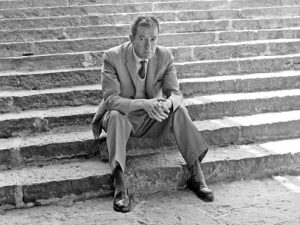 AIPCT is pleased to announce its fall reading group, beginning February 17, and running Tuesday nights until April 14. We will read two Juan Rulfo‘s short works, Pedro Páramo (1955) and The Burning Plain (1953). The group will be led by Odessa “Katrina” Colombo. The reading schedule is below. The group is free and open to the public.
We will meet in person at 7:00 pm central time, at the AIPCT, 411 N. 9th Street in Murphysboro. It is possible to join the discussion online. Send a request for a link to personalist61@gmail.com. We will use Teams. Typically the discussion will last until 9. Light snacks and drinks are provided, but participants may bring their own snacks to share, and their own favored beverage for themselves.
The editions of the books we will use are here and here.
Reading Schedule:
BOOK 1: Pedro Páramo
February 17th Pages 1 – 36
February 24th No Meeting
March 3rd Pages 36 – 64
March 10th Pages 64 – 94
March 17th Pages 94 – 126
BOOK 2: The Burning Plain
March 24th Pages 3 – 34
March 31st Pages 40 – 72
April 7th Pages 73 – 105
April 14th Pages 106 – 146
About the Group Leader
 Odessa (aka) “Katrina” Colombo is a Senior Business Manager at Southern Illinois University, Carbondale. She holds a B.S. in Finance, a B.A. in philosophy and earned her M.A. in philosophy (2011) from Southern Illinois University Carbondale. Her interest in philosophy consists of the history of philosophy, Eastern philosophy, and existentialism. She is particularly focused on the epistemology of faith and cultural narratives. She led the AIPCT reading group on Women Who Run with the Wolves in Spring 2019.
About the Author
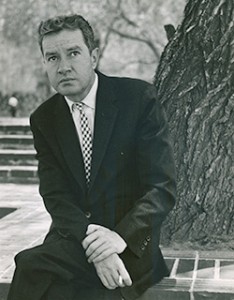 Juan Rulfo (born May 16, 1917, Apulco, Mexico —died January 7, 1986, Mexico City) was a Mexican writer who is considered one of the finest novelists and short-story creators in 20th-century Latin America, though his production—consisting essentially of two books—was very small. Because of the themes of his fiction, he is often seen as the last of the novelists of the Mexican Revolution. He had an enormous impact on those Latin American authors, including Gabriel García Márquez, who practiced what has come to be known as magic realism, but he did not theorize about it. Rulfo was an avowed follower of the American novelist William Faulkner.
About the Books
Pedro Páramo
A 1955 masterpiece of the surreal that influenced a generation of writers in Latin America, Pedro Páramo is the otherworldly tale of one man’s quest for his lost father. That man swears to his dying mother that he will find the father he has never met—Pedro Páramo—but when he reaches the town of Comala, he finds it haunted by memories and hallucinations. There emerges the tragic tale of Páramo himself, and the town whose every corner holds the taint of his rotten soul. Although initially published to a quiet reception, Pedro Páramo was soon recognized as a major novel that has served as a touchstone text for writers including Mario Vargas Llosa and José Donoso. Now published in a new translation from the definitive Spanish edition by celebrated Rulfo scholar Douglas J. Weatherford, and featuring a foreword by Gabriel García Márquez, this new edition of the novel cements its place as one of the seminal literary texts of the twentieth century.
The Burning Plain
Since its publication in 1953, Juan Rulfo’s The Burning Plain (El Llano en llamas) has become Mexico’s most significant and most translated collection of short fiction. Set largely in a distressed rural region of the state of Jalisco known as El Llano Grande (the burning plain of the title), the seventeen stories of this anthology trace the lives of characters in the wake of the Mexican Revolution (1910–1917) and the Cristero Revolt (1926–1929). A father carries his fatally wounded son through the night in search of healing; a young girl’s prized cow is swept away by a flood, along with her family’s harvest; and a group of campesinos spend all day walking across the immense, barren Llano that the government has given them to farm. Through it all, Rulfo rejects moralizing and nostalgia, capturing instead the hushed reality of a landscape and people marked by violence and the weight of hardship and injustice.